
My sweet James says very few words, but one phrase he has down well is “I can’t.” The other day, I asked him to pick up a piece of playdoh he had purposely thrown on the floor. He looked at me and in a whining voice said, “I can’t.” I stared straight back at him and replied, “Yes, you can!” He proceeded to argue, and of course, that’s when my stubborn streak kicked in. It was a stand-off. Would he pick up the playdoh or not? Would I back down or stand firm?
It took about 30 minutes of me standing post between the kitchen (where the playdoh was) and the hallway to his bedroom, insisting that he could not go play unless he picked up that piece of playdoh, before he finally chose to obey. He slowly scooped up the playdoh, dropped it in the trash can, and immediately started to sob. Of course, I hugged him and told him how proud I was of him for obeying, but it took a little while for the tears to subside.
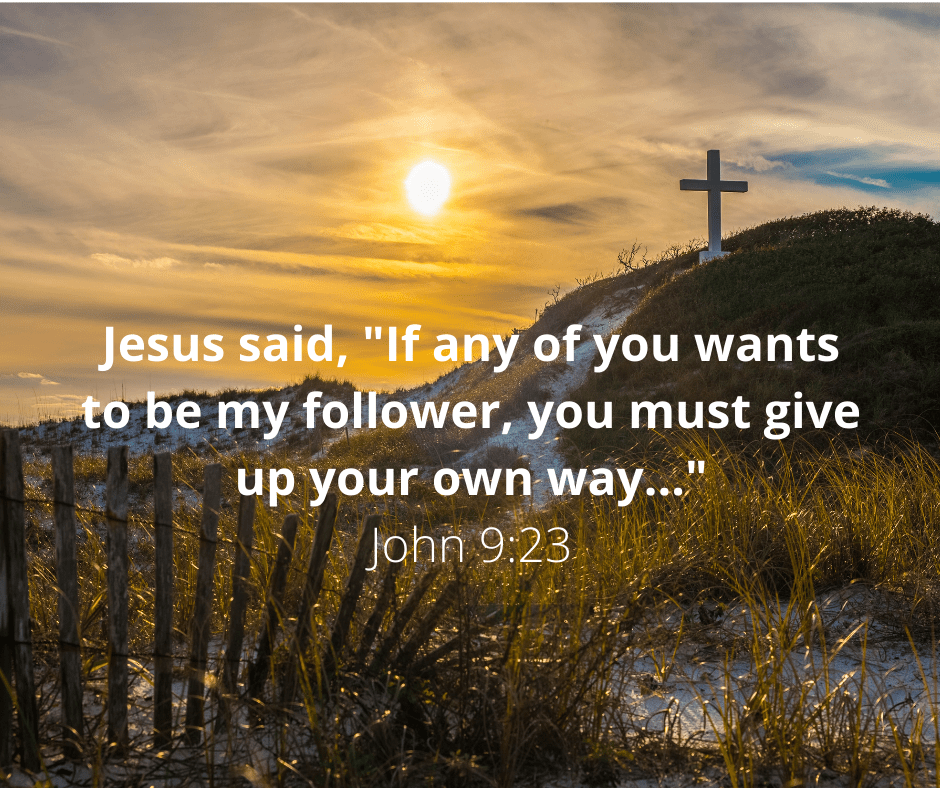
I’m not certain why James started to cry, but this is something he does often when he finally submits and obeys. I’ve noticed this reaction many times and I have wondered what he is really feeling inside that brings out such intense emotion. My suspicion is that he is overcome with a reality we all must face–submitting your will is hard and requires allowing a little part of yourself to die and yet it also comes with a sense of relief. Galatians 5:24 says, “Those who belong to Christ Jesus have crucified the flesh with its passions and desires,” and Jesus reminds us that “anyone who would come after me must deny himself (Luke 9:23).” When we obey, it requires us to sacrifice the fleshly part of us that wants our own way. It demands we fully recognize that our way is not best. That is not easy, and it hurts! But when we do it, God’s spirit within us can’t help but rejoice also. Even in the emotional pain of having to lose part of our fleshly selves, we know deep inside that what we did was good and pleasing to God. So maybe when James obeys he is feeling the sadness of having surrendered or maybe he’s feeling a tiny sense of relief and pride in that he chose the better way.
As I continue to reflect on story about James and the playdoh, I also am struck by how he so quickly said, “I can’t,” when I knew he could. It is true that there are many things James can’t do. He can’t read. He can’t ride a bike. He can’t cut his own food with a knife. But James can bend down, pick something off the floor, and put it in a trash can. There’s no question about whether or not he can do that. So why did he say he can’t do something. What did he really mean?
I tend to believe that what James meant was, “I don’t want to.” Oh, how easy it is to make excuses for things when we don’t want to do something. I realized how often we adults do the same thing when we clearly hear God call us to do a task that seems overwhelming, uninteresting, or just not something we want to do! I have to admit I often immediately start listing reasons in my head why I can’t do whatever it is God has asked. “I don’t have the time.” “I don’t know how.” “I don’t have the money or resources.” I’m never honest and say, “I don’t want to.” I talk around the issue and dig my heels in. Sometimes I even just wait a while and hope God forgets that he asked me to do something or I act like I didn’t hear Him. I mean really, when I truly analyze what tactics I will use to avoid doing something I KNOW God wants me to do, I must admit I can be ridiculously childish. Anyone else out there willing to admit to this?
Of course, God does not always insist on His own way, like I did with James. He allows us the freedom to stubbornly refuse to obey. And oh how many blessings we miss when we do. If James had just obeyed immediately without even thinking about it, he would have avoided so much frustration and tears. If he had been able to look past the fact that he didn’t want to do something and skip right to the part where he realized all would go much better if he just obeyed, then the story of the playdoh would have been one of joy and peace instead of sadness and tension.
As I continue in my journey of faith, my desire is to take “I can’t” out of my vocabulary and stop making excuses for not answering God’s call. I must not focus on my own weaknesses, inabilities, or desires but remember to trust God’s plan, His ability, and His provision. Maybe I can’t, but GOD CAN. If I will ever truly die to myself and surrender my will to the Lord completely, how many moments of sadness, regret, and suffering I might forego. I might shed some tears at the time, but maybe they’ll be tears of joy!
 Growing By Surprise